Marketing frameworks · Understanding the customer

Customer journey (See, Think, Do, Care)

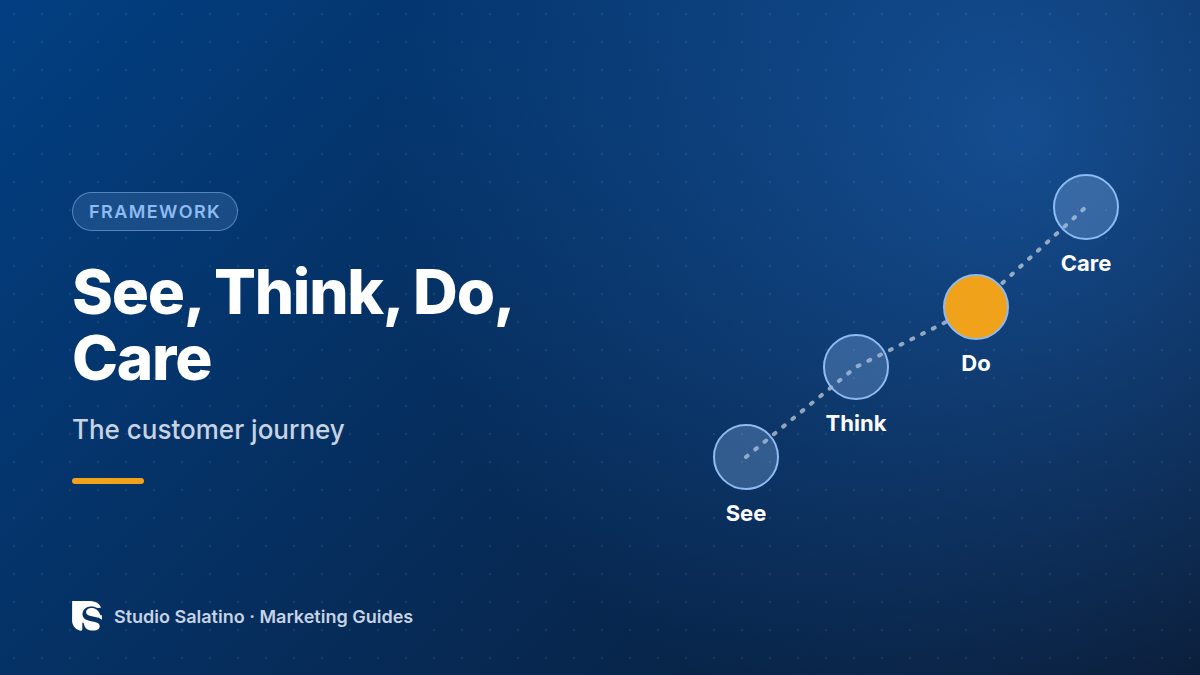
See, Think, Do, Care

by Published on Updated on 6 min readBeginner

When to use it
When you are designing a marketing plan or want to understand at which stage of the journey you are losing customers.
Origin
Avinash Kaushik, 2013 (See, Think, Do, Care model)

Key points

  • Four stages: See, Think, Do, Care.
  • Each stage has different needs, channels and content.
  • Each stage is measured with its own indicator.
  • Weak boxes become actions in the plan.

How to apply it, step by step

  1. Describe the need at each stage

    For See, Think, Do and Care, write down the question the customer is asking.

  2. Choose channels and touchpoints

    Where you meet the customer at that stage.

  3. Define content and messages

    What to say to move them on to the next stage.

  4. Assign an indicator to each stage

    Reach, engaged visits, conversions, repeat purchases.

  5. Link it to the plan

    Every empty or weak box becomes an action.

What it is for

The See, Think, Do, Care model describes the customer journey in four stages and links channels, content and indicators to each one. It stops you speaking to everyone in the same way: people who don’t know the business need different messages from those who are already customers.

The four stages

  • See (discovery): people who might be interested but don’t know the business yet. You need visibility and content that draws them in.
  • Think (consideration): people comparing the alternatives. You need proof, examples and answers to their doubts.
  • Do (purchase): people ready to choose. You need a simple path and a clear offer.
  • Care (return and recommend): people who are already customers. You need support, useful content and reasons to come back.

How to fill it in

For each stage you write down the customer’s need or question, the channels and touchpoints, the content and messages, and the indicators used to measure it. The result is a table that links the customer journey to the actions in the plan and to the funnel.

An example: the online cosmetics shop

See: short Instagram videos about natural ingredients (indicator: reach). Think: an ingredients guide and reviews on the website (engaged visits). Do: a welcome discount and a simple checkout (conversion rate). Care: post-purchase emails and a loyalty programme (repeat customers).

Mistakes to avoid

  • Investing only in the Do stage and forgetting the people who have yet to discover the business.
  • Using the same message at every stage.
  • Not measuring each stage with its own indicator.
Frequently asked questions

What do See, Think, Do and Care mean?

They are the four stages of the customer journey: See when people discover the business, Think when they weigh up the alternatives, Do when they buy and Care when they come back and recommend it.

Who created the See, Think, Do, Care model?

Avinash Kaushik, a digital marketing analyst, who proposed it in 2013.

What is the difference between the customer journey and the funnel?

The customer journey describes the path from the customer’s point of view, with needs and content for each stage; the funnel measures how many people move from one step to the next.

Terms in this framework

Full glossary →

First step

Let’s apply it to your business

Every partnership starts with a conversation. The first two steps are free and with no obligation: they help us understand whether our method is right for your business.

  1. 1
    Fill in the requestOne minute: your name, company and how to reach you.
  2. 2
    Activate your accessAn email with a button takes you to the client area. Then the consultant sends you the discovery questionnaire: about 10 minutes, even in several sittings.
  3. 3
    Free discovery callA 45-minute video call with the consultant to see whether and how we can help you.

Prefer to write to us? info@studiosalatino.com

Step 1 of 3 Request · then questionnaire (10 min) · then free call (45 min)

Right after sending, you receive an email with a button to activate your access to the client area. Then the consultant sends you the discovery questionnaire (about 10 minutes, even in several sittings) and you schedule the free 45-minute discovery call.

Book your free discovery call