What it is for
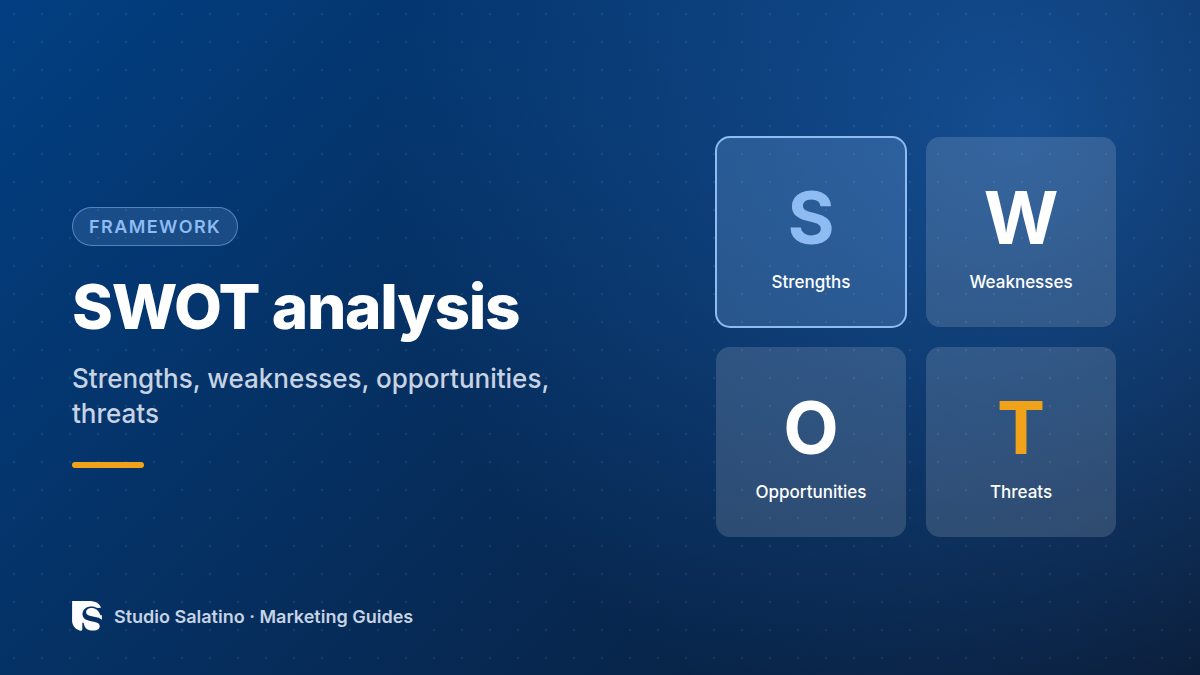
SWOT analysis captures a business’s situation along two axes: what depends on it (strengths and weaknesses) and what comes from the market (opportunities and threats). It is used before writing a plan, to choose what to focus on and what to protect yourself from.
The four quadrants
- Strengths: what the business does better than its competitors, the resources that set it apart.
- Weaknesses: what is missing or not working well, even if it is uncomfortable to admit.
- Opportunities: trends, unmet needs, channels your competitors have barely covered.
- Threats: aggressive competitors, market changes, new regulations.
From analysis to decisions
A useful SWOT doesn’t stop at the list: you cross-match the quadrants. Strengths are used to seize opportunities, and weaknesses are fixed before threats make them costly. Each combination becomes an action in the plan.
An example: the dental practice
Strength: excellent reviews and specialist staff. Weakness: slow website on mobile and no online booking. Opportunity: local searches for “dentist near me” are growing. Threat: low-cost chains in the area. Resulting action: a fast website with online booking and a well-maintained Google Business Profile, to turn reviews into appointments.
Mistakes to avoid
- Writing generic items such as “quality” or “professionalism” with no facts to back them up.
- Mixing up the levels: a new booking app is a market opportunity, not a strength, until you actually use it.
- Stopping at the list without drawing any decisions from it.