by Studio SalatinoPublished on Updated on 6 min readBeginner
When to use it
When entering a new market or writing a plan, and you need to understand what is changing around the business.
Origin
Francis Aguilar, 1967 (PEST analysis, later extended to PESTEL)
Key points
It analyses what the business does not control but must take into account.
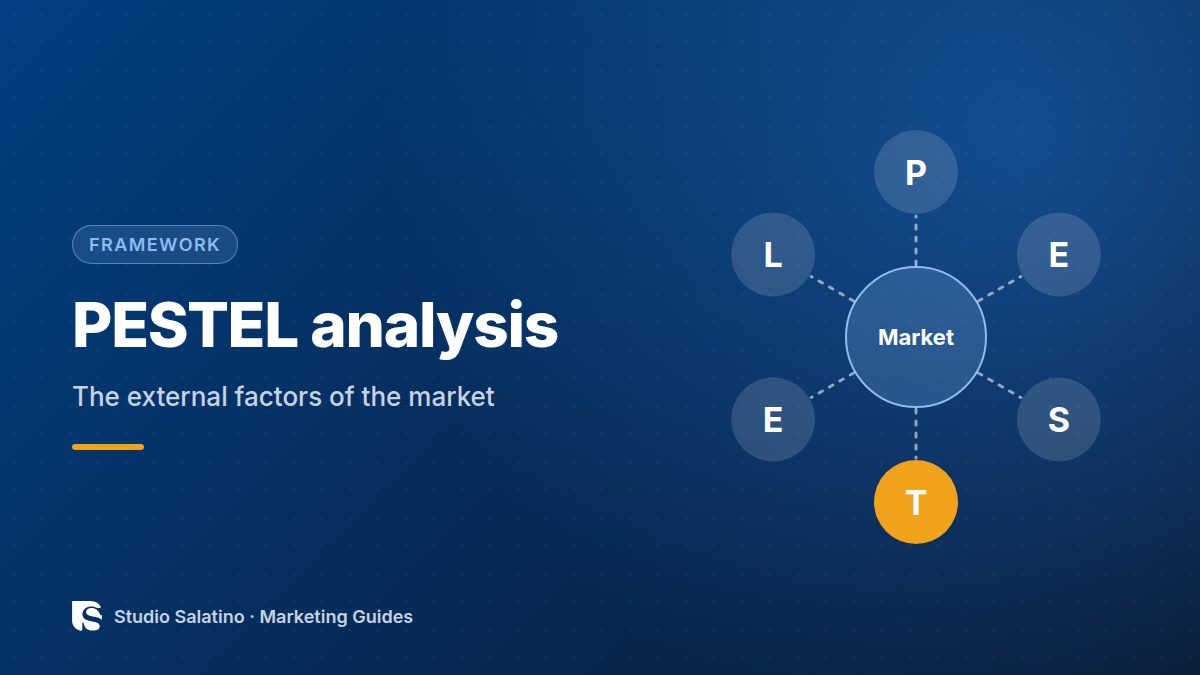
Six factors: political, economic, socio-cultural, technological, environmental, legal.
What matters is the direction of change, not just the current situation.
The relevant factors feed into the SWOT.
How to apply it, step by step
Define the market
Define the sector, territory and customers you are talking about.
Examine the six factors
For political, economic, socio-cultural, technological, environmental and legal factors, note the changes under way.
Assess impact and direction
For each change, note whether it helps or hinders and how much it weighs on customers.
Bring the factors into the SWOT
The most relevant factors become opportunities or threats.
Update it regularly
Review the analysis at least once a year or whenever something important changes.
What it is for
PESTEL analysis examines the external factors that affect the market a business operates in. It helps you avoid being caught out by changes you cannot control, and spot early the opportunities they open up.
The six factors
Political: incentives, grants and calls for funding, local and national policies.
Economic: purchasing power, costs, inflation, access to credit.
Socio-cultural: habits, values, age and make-up of the population.
Technological: new tools, digitalisation, artificial intelligence.
Environmental: sustainability, seasonality, climate, local area.
Legal: privacy, industry regulations, advertising rules.
How it is used in marketing
For each factor, you note only the changes that genuinely affect the business’s customers, along with their likely direction. The most important factors end up among the opportunities and threats of the SWOT and shape the plan’s choices.
An example: the farm stay
Political: a regional grant for rural hospitality. Economic: rising energy costs. Socio-cultural: growing demand for nature holidays and locally sourced produce. Technological: more and more bookings made by phone. Environmental: a long season in the mountains. Legal: new rules on short-term lets. Two priorities emerge: mobile booking and off-season packages.
Mistakes to avoid
Filling in every box even when the factor doesn’t matter to the customer.
Describing the present without indicating the direction of change.
Leaving the analysis out of the plan: every relevant factor should lead to a decision.
Frequently asked questions
What does PESTEL stand for?
It is the acronym for the six external factors analysed: political, economic, social, technological, environmental and legal.
What is the difference between PESTEL and SWOT?
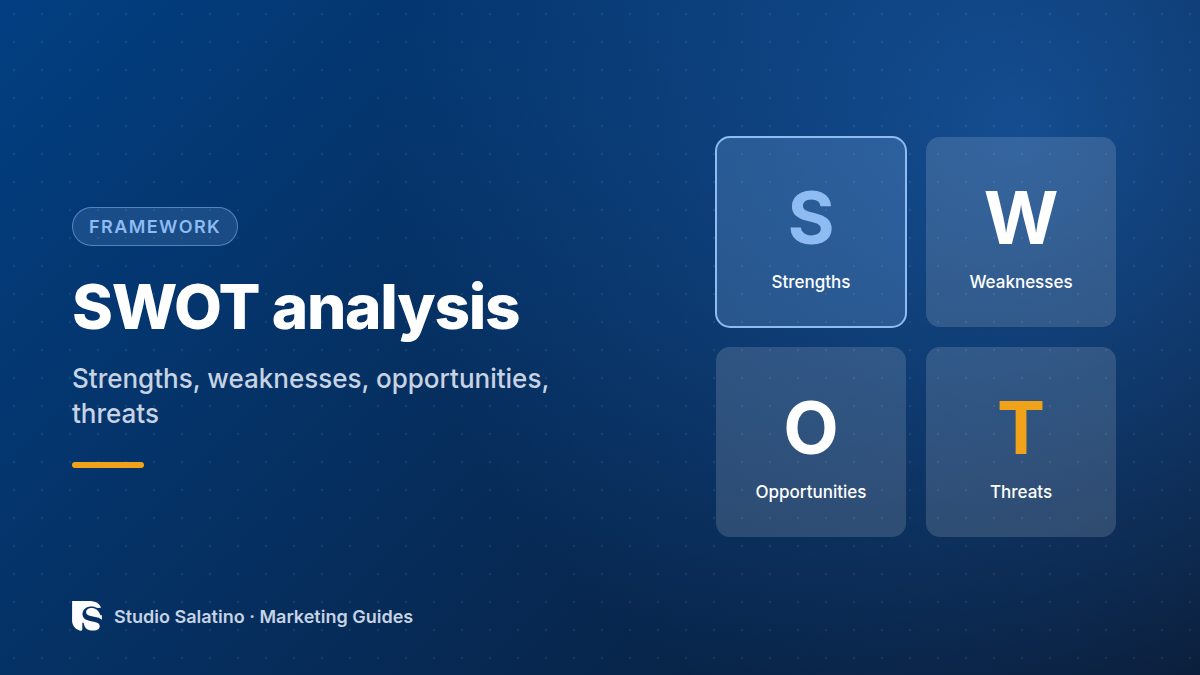
PESTEL looks only at the external context; SWOT combines internal and external factors. PESTEL is often done first and feeds into the opportunities and threats of the SWOT.
How often should you update a PESTEL analysis?
At least once a year, or whenever something significant changes, such as a new regulation or an innovation in the sector.
Every partnership starts with a conversation. The first two steps are free and with no obligation: they help us understand whether our method is right for your business.
1
Fill in the requestOne minute: your name, company and how to reach you.
2
Activate your accessAn email with a button takes you to the client area. Then the consultant sends you the discovery questionnaire: about 10 minutes, even in several sittings.
3
Free discovery callA 45-minute video call with the consultant to see whether and how we can help you.