Marketing frameworks · Understanding the customer

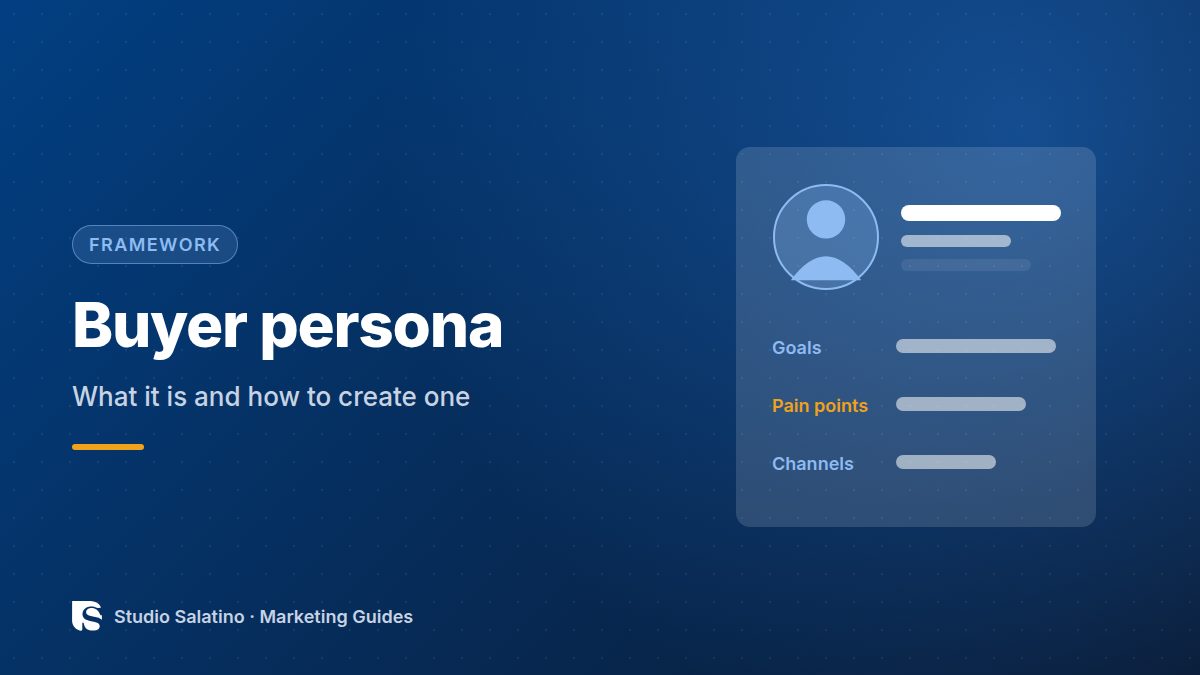
Buyer persona

Buyer persona

by Published on Updated on 6 min readBeginner

When to use it
When you need to choose channels and messages, or when your communication seems to speak to everyone and no one.
Origin
Alan Cooper, 1990s

Key points

  • It represents a concrete ideal customer, not a generic audience.
  • It is based on real conversations and data.
  • It includes objections to buying and sources of information.
  • Two or three personas are enough for most SMEs.

How to apply it, step by step

  1. Listen to your best customers

    Talk to a few satisfied customers and capture their own words.

  2. Describe who they are

    Give them a fictional name, age, role and context.

  3. Note their goals and problems

    What they want to achieve and what is stopping them today.

  4. List objections and sources

    Why they hesitate to buy and where they look for information.

  5. Turn it into messages and channels

    Choose where to reach them and what to say to overcome their objections.

What it is for

A buyer persona is a simplified, concrete portrait of your ideal customer. It helps you choose channels, messages and offers with a real person in mind rather than a generic audience.

What it contains

  • Who they are: fictional name, age, role, family or business context.
  • Goals: what they want to achieve.
  • Problems and frustrations: what is holding them back today.
  • Objections to buying: price, trust, time.
  • Where they get information: channels, websites, people they trust.
  • What convinces them: proof, messages, guarantees.

Where to get the information

From conversations with your best customers, the questions that come in by email and phone, reviews, and data from your website and CRM. A persona built on assumptions leads to the wrong messages: a little verified information is better.

An example: the ceramics workshop

Anna, 42, is looking for original gifts with a story behind them. She wants to impress without spending too much, and worries that a handmade item will arrive broken. She gets her information on Instagram and asks her friends for advice. What convinces her are photos of the workshop and insured shipping. The result: posts about the making process and a prominent replacement guarantee.

Mistakes to avoid

  • Describing a customer “for everyone”: if you speak to everyone, you speak to no one.
  • Making up details without checking them with real customers.
  • Creating too many: two or three well-made personas are enough for almost every small business.
Frequently asked questions

What is a buyer persona?

It is a simplified portrait of your ideal customer: who they are, what they are looking for, what doubts they have and where they get their information. It helps you choose messages and channels.

How many buyer personas do you need?

For most small businesses, two or three, well built and validated with real customers.

How do you gather the information for a buyer persona?

By talking to your best customers and reading questions, reviews and data from your website and CRM.

Terms in this framework

Full glossary →

First step

Let’s apply it to your business

Every partnership starts with a conversation. The first two steps are free and with no obligation: they help us understand whether our method is right for your business.

  1. 1
    Fill in the requestOne minute: your name, company and how to reach you.
  2. 2
    Activate your accessAn email with a button takes you to the client area. Then the consultant sends you the discovery questionnaire: about 10 minutes, even in several sittings.
  3. 3
    Free discovery callA 45-minute video call with the consultant to see whether and how we can help you.

Prefer to write to us? info@studiosalatino.com

Step 1 of 3 Request · then questionnaire (10 min) · then free call (45 min)

Right after sending, you receive an email with a button to activate your access to the client area. Then the consultant sends you the discovery questionnaire (about 10 minutes, even in several sittings) and you schedule the free 45-minute discovery call.

Book your free discovery call