What it is for
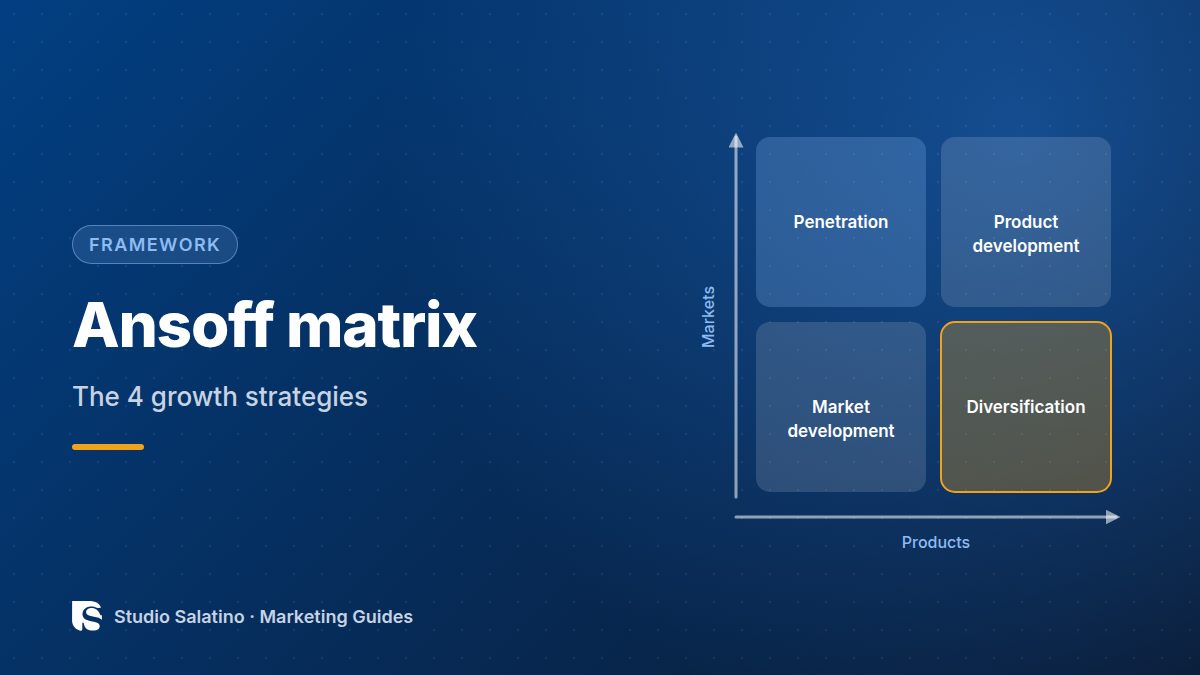
The Ansoff Matrix helps you choose a direction for growth by crossing existing or new products with existing or new markets. The result is four strategies, with risk increasing the further you move from what you know.
The four strategies
- Market penetration: selling more of the same products to the same customers. It is the least risky.
- Product development: new offers for existing customers.
- Market development: the same products for new customers or areas.
- Diversification: new products for new markets. It is the riskiest.
How to choose
First you assess how much room for growth is left in penetration: it is often the quickest and cheapest route. The other strategies require more investment and new know-how, and need to be supported by data on the market and customers.
An example: the dental practice
Penetration: bringing back inactive patients with a hygiene promotion. Product development: an annual check-up package. Market development: agreements with local companies for their employee benefit schemes. Diversification: oral hygiene courses for schools. The practice starts with the first, the quickest, and prepares the third for the following year.
Mistakes to avoid
- Jumping to diversification without making the most of existing customers.
- Underestimating the investment and skills required by the more distant strategies.
- Chasing several routes at once with limited resources.