What it is for
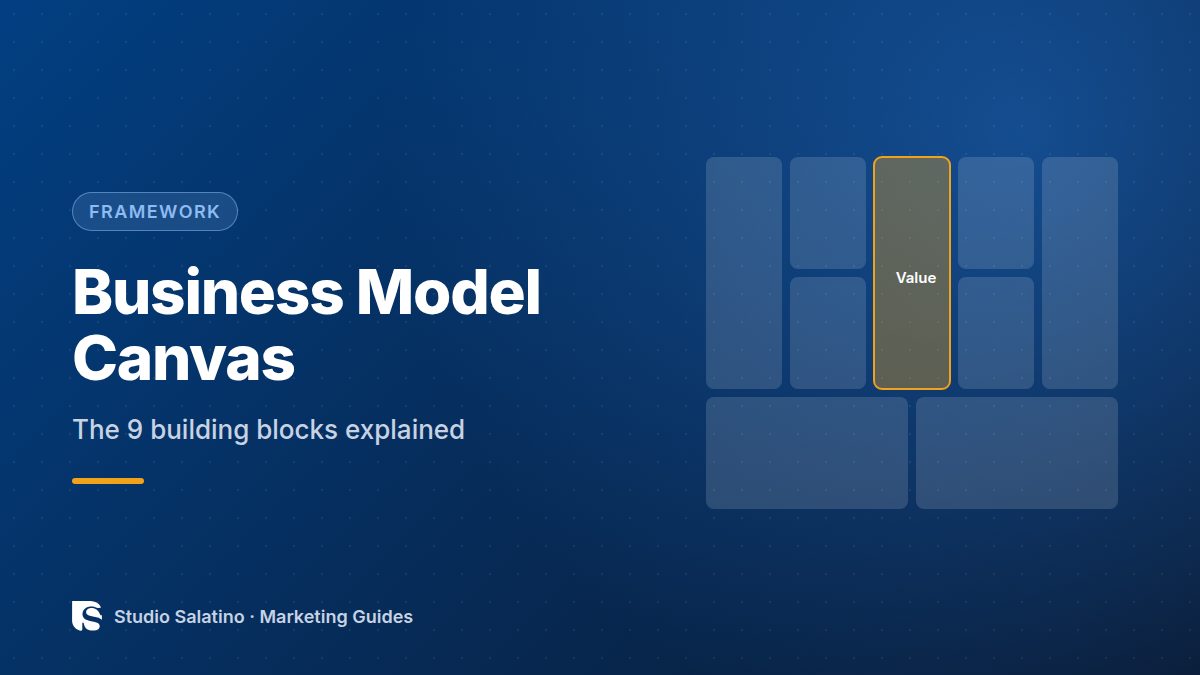
The Business Model Canvas describes on a single page how a business creates, delivers and captures value. Nine connected building blocks show at a glance who it works for, what it offers, how it does it and with what costs and revenue.
The nine building blocks
- Customer segments: who value is created for.
- Value proposition: why customers choose the business.
- Channels: how the proposition reaches customers.
- Customer relationships: what kind of relationship is built.
- Revenue streams: how and how much customers pay.
- Key resources: what is needed to operate.
- Key activities: what has to be done well.
- Key partners: suppliers and allies.
- Cost structure: the main expenses.
How to read it
The right-hand side of the canvas covers the market (customers, channels, relationships, revenue), the left-hand side the organisation (resources, activities, partners, costs); in the centre is the value proposition that connects them. Changing one block affects the others: a new channel requires resources and brings costs.
An example: the electrical supplies distributor
Segments: installers and construction firms. Proposition: immediate availability, technical advice, on-site delivery. Channels: sales reps, trade counter, online client area. Relationships: dedicated sales rep. Revenue: sales of materials and delivery services. Resources: warehouse and catalogue. Activities: purchasing, logistics, sales. Partners: manufacturers and couriers. Costs: warehouse, staff, transport.
Mistakes to avoid
- Filling in the blocks separately without checking that they are consistent.
- Writing a generic value proposition.
- Treating it as a one-off document: it needs updating when the market changes.