Why we start here
A plan without analysis is a list of unconnected actions. First you understand the market you operate in, who you work for and who else is competing for the same attention; then you choose what to do. On the platform, these sections are written together with the client, because they know their sector better than anyone.
The sections of the strategy
- Market and context: size, trends, seasonality, what is changing.
- Audience: segments (groups of customers) and buyer personas (portraits of ideal customers).
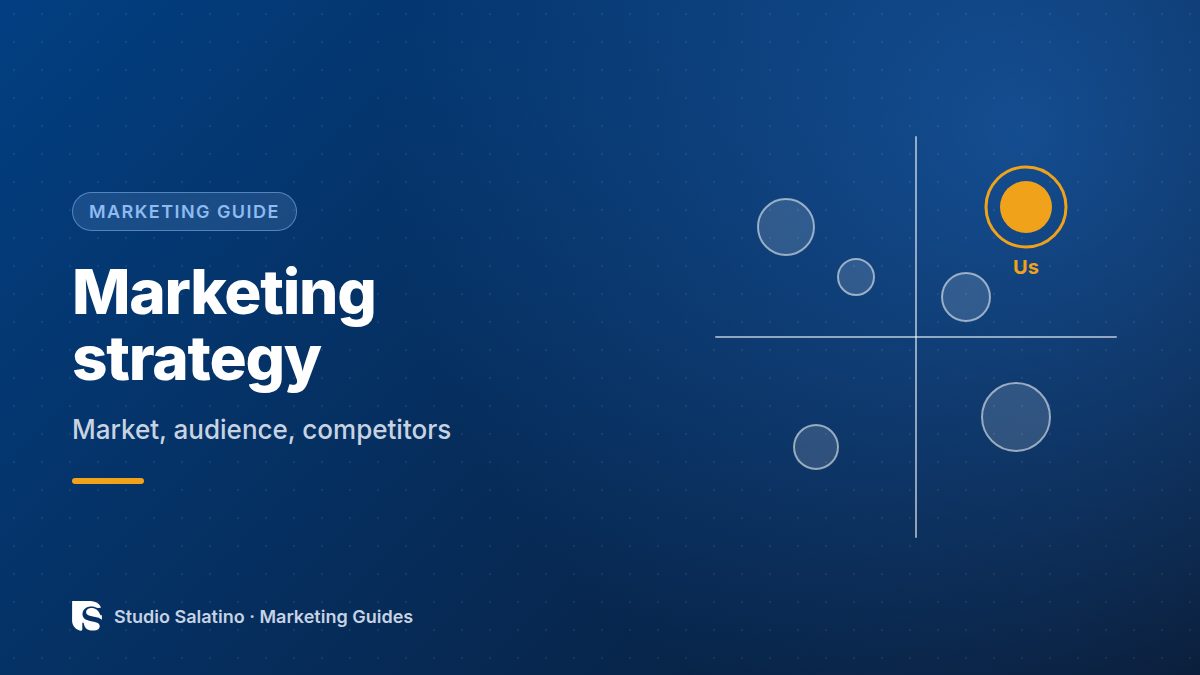
- Competitors and positioning: who competes with you and what sets you apart, on a two-axis map.
- Value proposition: why choose you, with evidence and tone of voice.
- Business Model Canvas: how the business creates, delivers and captures value.
- Team and resources: who does what and what you have available.
- Marketing channels: role in the customer journey, goal, formats, frequency and measurement.
- SWOT: a summary of strengths, weaknesses, opportunities and threats.
How we work together
For each section, the consultant prepares a few targeted questions (“who are your three best customers?”, “who do you see as your competitor?”). You reply in a few lines, as you would in conversation. Your answers become the basis of the draft, which you review together: you can correct it, comment on it and finally approve it. Once approved, a section goes into the plan.
An example: handmade ceramics
A ceramics workshop answers: “our best customers are couples in their forties looking for gifts with a story; our competitors are the marketplaces and local artisans; what sets us apart is that every piece is signed”. From this come two segments (gifts, home décor), a persona (“Anna, 42, looking for an original gift”), a positioning (“one-of-a-kind pieces with a story”) and the channels: Instagram and a newsletter. Nothing is made up: everything comes from what the owner said.
Mistakes to avoid
- Describing the customer as “everyone”: if you speak to everyone, you speak to no one.
- Listing competitors you don’t know: better to name categories and check.
- Copying generic phrases (“quality and professionalism”): you need facts the customer can check.
- Writing the section alone and showing it only when it is finished: the discussion is the most useful part.