Marketing guide

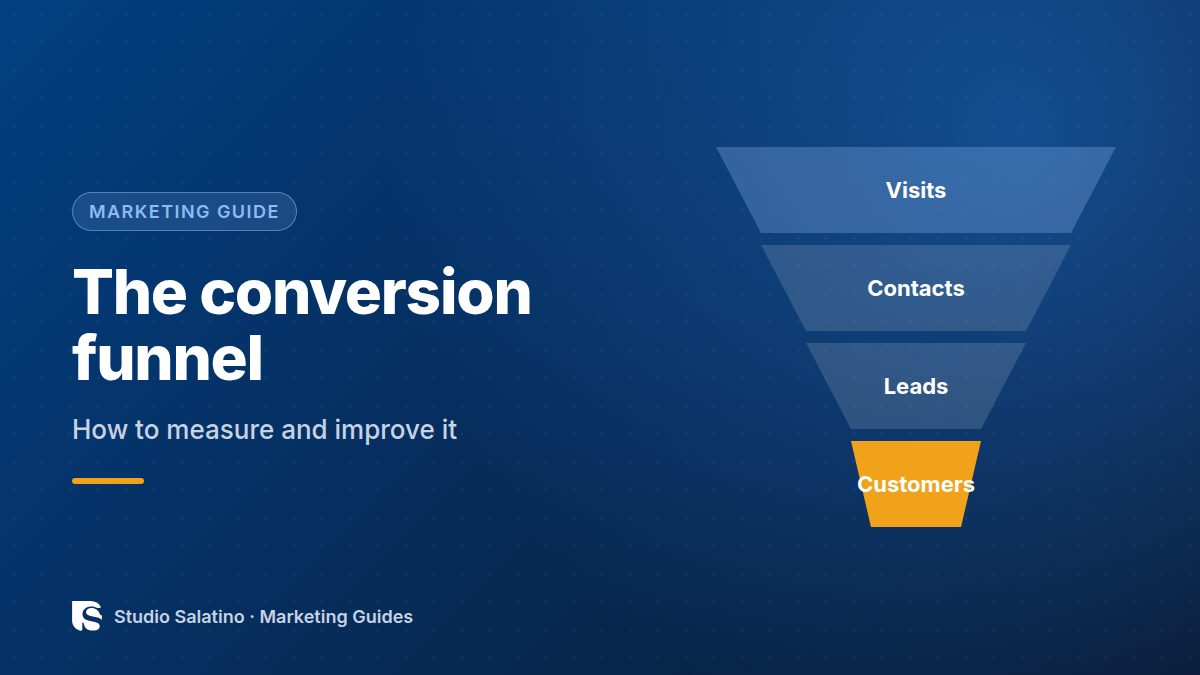
The conversion funnel

The conversion funnel

by Published on Updated on 6 min readBeginnerFree, no sign-up required

Key points

  • The funnel is made up of a few clear, sequential stages.
  • Count how many people reach each stage in the same period.
  • The progression rate between two stages shows where people drop out.
  • Each step has different levers: message, response times, proposal.
  • With little data, rates are unstable: longer periods are better.

What a funnel is

It is the sequence of steps a person takes to reach a goal: for example visit → enquiry → appointment → customer. At each step some people drop out, and that is normal: the aim is to find where the drop-off is larger than expected.

How to measure it

  • Define the stages (few, clear, sequential).
  • Count the people who reach each stage in the same period.
  • Calculate the progression rate from one stage to the next.
  • Compare rates across channels, devices and periods.

Where to step in

  • Between visit and enquiry: message, offer, page clarity, website speed.
  • Between enquiry and appointment: response times and booking options.
  • Between appointment and customer: proposal, pricing, trust, follow-up.

With little data

If there are only a few people in the funnel, rates are unstable: better to wait for more data or look at longer periods before drawing conclusions.

An example: the online shop

Out of 1,000 visits: 300 view a product, 60 add it to the basket, 25 buy. The weakest step is from product to basket (20%): you improve the photos, make the price visible and add reviews. Raising that step to 30% means 12 more purchases with no extra traffic.
Frequently asked questions

What is a conversion funnel?

It is the sequence of steps a person takes to reach a goal, such as visit, enquiry, appointment and customer. At each step, some people drop out.

How do you know where to step in within the funnel?

Calculate the progression rate between each stage and the next, and compare it across channels, devices and periods: step in where the drop-off is larger than expected.

What should you improve between the visit and the enquiry?

The message, the offer, the clarity of the page and the speed of the website.

Terms in this guide

Full glossary →

First step

Let’s apply it to your business

Every partnership starts with a conversation. The first two steps are free and with no obligation: they help us understand whether our method is right for your business.

  1. 1
    Fill in the requestOne minute: your name, company and how to reach you.
  2. 2
    Activate your accessAn email with a button takes you to the client area. Then the consultant sends you the discovery questionnaire: about 10 minutes, even in several sittings.
  3. 3
    Free discovery callA 45-minute video call with the consultant to see whether and how we can help you.

Prefer to write to us? info@studiosalatino.com

Step 1 of 3 Request · then questionnaire (10 min) · then free call (45 min)

Right after sending, you receive an email with a button to activate your access to the client area. Then the consultant sends you the discovery questionnaire (about 10 minutes, even in several sittings) and you schedule the free 45-minute discovery call.

Book your free discovery call