Two different approaches
Google Ads reaches people who are already searching for something: it is powerful when there is existing demand. Meta Ads (Facebook and Instagram) reaches people by interests and behaviour: it is well suited to creating interest and retargeting people who have already visited your website.
Before spending
- Define the goal (sales, enquiries, bookings) and the conversion to measure.
- Set up reliable tracking and check that the data are coming through.
- Prepare a landing page consistent with the ad.
- Set a test budget and a learning period.
How to assess a campaign
- CTR and CPC tell you whether the ad is relevant and how much the traffic costs.
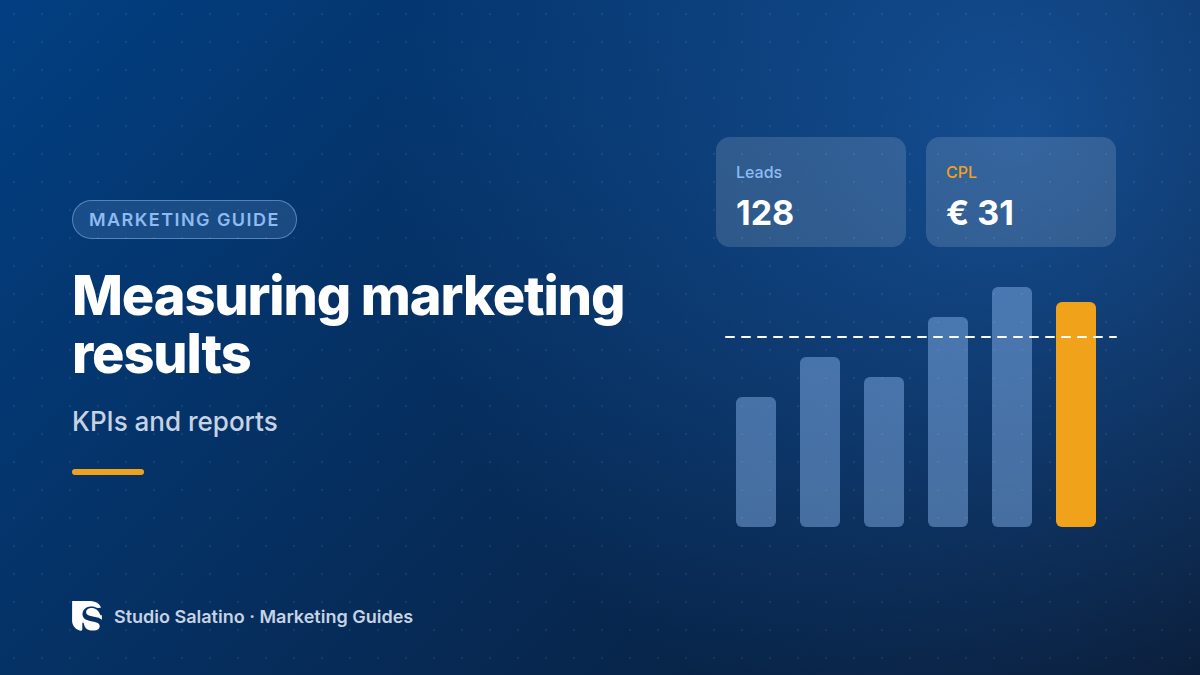
- Conversion rate, CPL or CPA tell you whether the traffic produces results.
- ROAS or ROI tell you whether it pays off, taking your margin into account.
Common mistakes
- Changing too many things at once and not knowing what worked.
- Judging after a few days: the platforms need data.
- Neglecting the creative: images and messages matter as much as the budget.
- Forgetting the follow-up: leads need to be called back quickly.
An example: the spring campaign
A farm-stay business spends €600 in March: €400 on Google (people searching for “agriturismo Sila”) and €200 on Meta (photos of the rooms). Google brings in 18 enquiries, Meta 4: for April, more budget shifts to Google and Meta is used to remind website visitors of the offer.