Marketing guide

The editorial plan: what to publish and when

Editorial plan

by Published on Updated on 6 min readBeginnerFree, no sign-up required

Key points

  • The editorial plan stops you publishing at random or never publishing at all.
  • You start from the goals of the marketing plan.
  • A few features you can keep up over time.
  • Better two pieces a week for a year than ten in one month.
  • Every piece of content has an owner and a delivery date.

What it is for

The editorial plan prevents two problems: publishing at random and never publishing at all. It sets out what gets published, on which channel, when and who prepares it, so the work is spread over time.

How to build it

  • Start from the plan’s goals: which content helps you reach them?
  • Choose a few features (recurring themes) that you can keep up.
  • Set a realistic pace: better two pieces a week for a year than ten in one month.
  • Give each piece of content an owner and a delivery date ahead of publication.
  • Plan for approvals: who needs to sign off and how long it takes.

One calendar that holds everything together

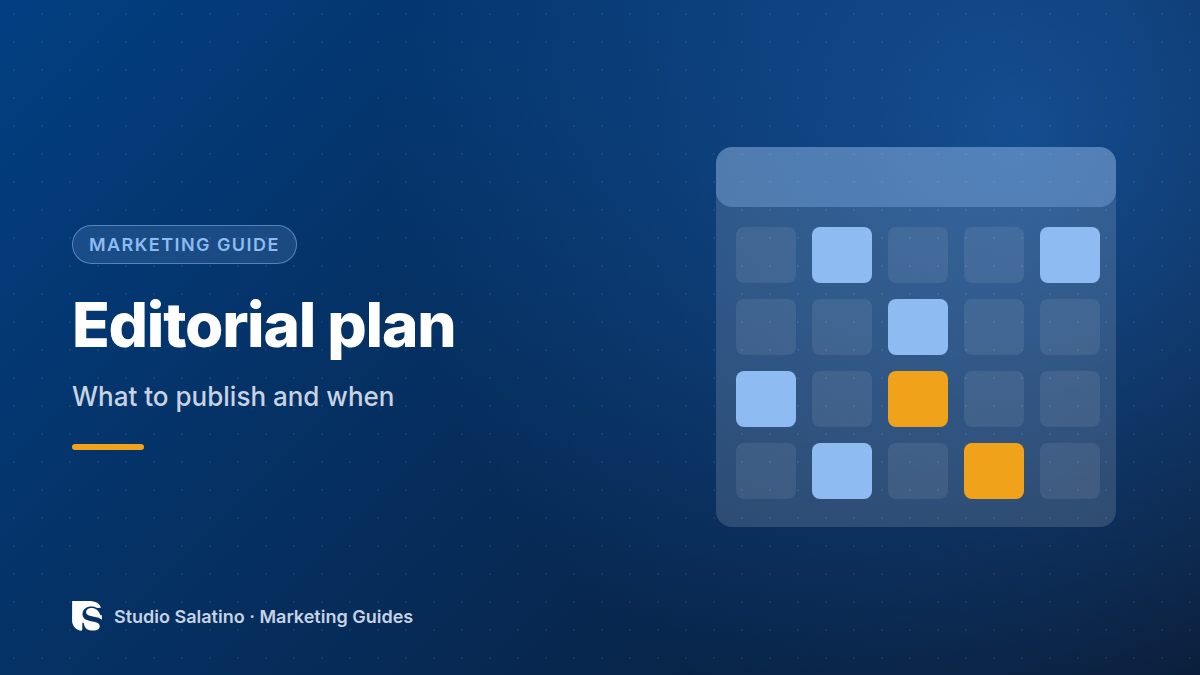
On the platform, the calendar shows not only content but also the deadlines for marketing plan actions, monthly reports and meetings with the client. You can hide what you don’t need using the filters at the top.

An example: a typical week

Monday, a “tip of the week” reel; Wednesday, a blog article; Friday, a post featuring a review. On the 5th, the October report; on the 12th, the review meeting; on the 15th, the “Christmas campaign” action is due. Everything sits in the same calendar, with the name of whoever is responsible.

Frequently asked questions

What is an editorial plan for?

To decide what to publish, on which channel, when and who prepares it, spreading the work over time instead of publishing at random.

How often should you publish?

At a realistic pace you can keep up: two pieces a week for a year are worth more than ten in a single month.

How do you build an editorial plan?

Start from the goals of the marketing plan, choose a few recurring features, set a sustainable pace and give every piece of content an owner and a delivery date.

Terms in this guide

Full glossary →

First step

Let’s apply it to your business

Every partnership starts with a conversation. The first two steps are free and with no obligation: they help us understand whether our method is right for your business.

  1. 1
    Fill in the requestOne minute: your name, company and how to reach you.
  2. 2
    Activate your accessAn email with a button takes you to the client area. Then the consultant sends you the discovery questionnaire: about 10 minutes, even in several sittings.
  3. 3
    Free discovery callA 45-minute video call with the consultant to see whether and how we can help you.

Prefer to write to us? info@studiosalatino.com

Step 1 of 3 Request · then questionnaire (10 min) · then free call (45 min)

Right after sending, you receive an email with a button to activate your access to the client area. Then the consultant sends you the discovery questionnaire (about 10 minutes, even in several sittings) and you schedule the free 45-minute discovery call.

Book your free discovery call